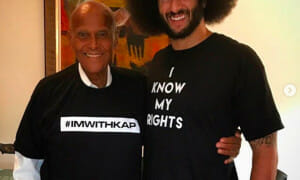
Colin Kaepernick is demonstrating his commitment by taking action once again. The ex-San Francisco 49ers quarterback is aware of the increased risk of infection faced by individuals in jail during the current pandemic. Many individuals are unable to secure their release due to financial constraints related to bail.
Recognizing this issue, Kaepernick and his Know Your Rights camp have partnered with Robert F. Kennedy Human Rights to announce a generous donation of $1 million to support community bail funds. Their aim is to assist in freeing those who are disproportionately affected by the prejudiced legal system.
Kaepernick emphasized in a statement, “Our legal system unfairly targets Black and Brown communities, punishing poverty under the guise of public safety. It is essential that we rethink the current system and eliminate wealth-based detention to liberate our fellow community members from racial injustice.”
It is crucial to note that jails and prisons currently represent the largest hotspots for COVID-19 transmission. Kerry Kennedy, the president of Robert F. Kennedy Human Rights, also remarked, “The exploitative nature of cash bail is deeply linked to the entrenched anti-Black racism that plagues our society. The $1 million joint contribution from Robert F. Kennedy Human Rights and Colin Kaepernick’s Know Your Rights Camp will empower local bail funds and expedite their vital mission of freeing individuals trapped in our local jails. However, our financial support alone will not be sufficient. Our legal experts and advocates will collaborate with grassroots activists to combat aggressive policing and the destructive cycle of mass incarceration that disproportionately impacts disadvantaged and Black communities. Our ultimate goal is to abolish cash bail promptly.”
Rahim Buford, the overseer of the Nashville Community Bail Fund, expressed the urgent need to release confined individuals, particularly given the lasting traumatic effects of incarceration, which have been exacerbated by the threat of COVID-19 within correctional facilities nationwide. Of the 1,000 individuals released by the fund since 2016, more than half were not ultimately prosecuted. Buford emphasized that prolonged detention can coerce individuals into pleading guilty, underscoring the importance of prompt release to protect against unjust outcomes.