I once fought seven matches in a single day — my first bout started at 8 a.m., my last one didn’t begin until 1 a.m. That tournament, Lights of Magnitka in Kazakhstan, is where I really learned what endurance means in judo. It isn’t just about lasting through one fight. It’s about still being sharp, still being fast, and still making smart decisions when your body has nothing left to give. Here are five things that get me there.
1. Train the fight you’ll actually have, not the one you imagine
A lot of athletes train for the match they picture in their head — clean, fast, over quickly. Real tournaments rarely go that way. I build my conditioning around long days: multiple matches, short rest windows, unpredictable pacing. If your training day never gets uncomfortable, your tournament day will be the first time it does, and that’s the wrong time to find out.
2. Treat recovery as part of training, not a break from it
Endurance isn’t only built on the mat — it’s built in the hours around it. Sleep, food, and how you recover between sessions decide how much of your training actually turns into strength on competition day. I try to be as disciplined about rest as I am about reps, even when it means giving up things other people my age don’t think twice about.
3. Separate physical fatigue from mental fatigue
The hardest part of a long tournament usually isn’t your legs — it’s your head. I’ve lost matches I was close to winning simply because I let frustration or fear creep in. Before every fight, I work to stay calm and stay focused only on the task directly in front of me, not the scoreboard, not the clock, not the fear of losing. That mental discipline is its own kind of endurance.
4. Build your base on the hardest competition you can find
I’ve competed at home in Kyrgyzstan and at international tournaments where the level of preparation and competition is simply higher — one mistake there can decide the whole match. Seeking out tougher competition, even when it’s uncomfortable, raised my ceiling faster than staying comfortable ever could.
5. Let your setbacks fuel the next block of training
In 2023 I qualified for the World Championships but couldn’t compete because I didn’t have funding or a sponsor to get there. Soon after, I wasn’t selected for the Asian Championships either. That stretch was one of the hardest of my career, and for a while I genuinely thought about quitting. What got me through it was turning that frustration into fuel — using it to train harder rather than let it stop me. Every setback since then has gone straight back into my conditioning.
Endurance, for me, was never just a physical target. It’s the discipline that judo built in me — the same discipline I now carry into balancing training with my business administration studies in the United States. Some days there’s nothing left after practice, and I still have to sit down and study. That’s endurance too.
About the Author
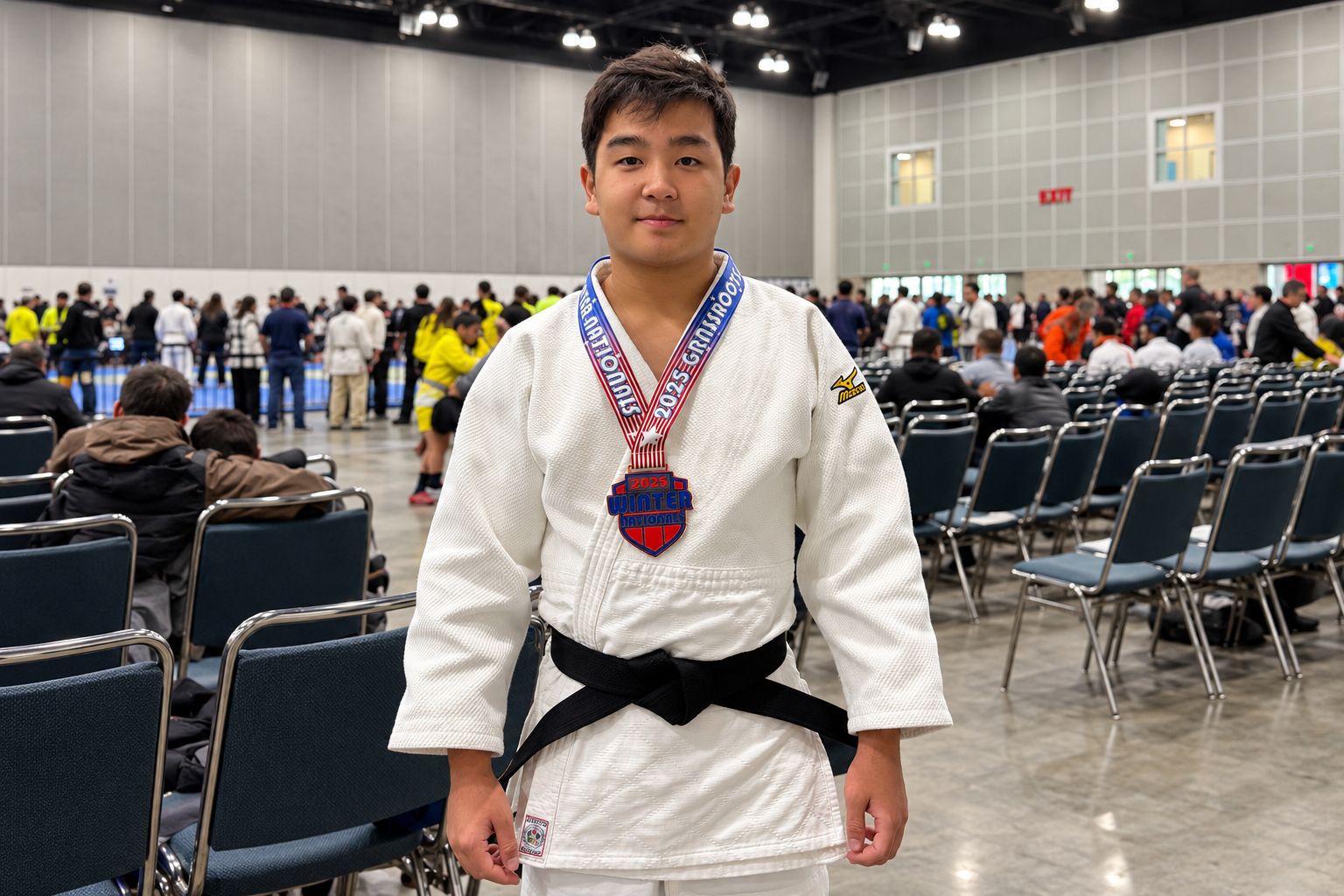
Tynychbek Abdizhalilov is a competitive judoka from Kyrgyzstan now training and competing in the United States while pursuing a Bachelor’s degree in Business Administration at Southern California State University. Over the course of his career he has won gold at the Sulaiman-Too international tournament in Osh and the Mayor’s Cup in Bishkek, and has medaled at the Lights of Magnitka tournament in Kazakhstan, the Pearl of Kyrgyzstan international tournament, the Kyrgyzstan national and cadet championships, and the 2025 Winter Nationals, among other titles earned throughout his junior and senior career. He is a Kyrgyz Republic high school graduate and holds a brown-black belt qualification. Outside competition, he plans to coach the next generation of judo athletes and eventually open his own judo school.