Mark Izydore is an experienced executive and co-manager at CJ Consultants, where he develops analytical solutions to help businesses expand their market presence across Florida and nationwide. With a professional background in accounting at Arthur Andersen and a strong academic foundation from Duquesne University and Carnegie Mellon University, he brings a disciplined, detail-oriented perspective to his work. In addition to his professional pursuits, Mark Izydore maintains an active lifestyle that includes playing tennis and basketball. His personal interest in tennis aligns with a broader awareness of the physical demands of the sport, including the types of injuries players commonly face and the importance of prevention strategies to support long-term participation and overall health.
An Overview of Common Tennis Injuries
Tennis is a popular physical activity in the United States. According to the United States Tennis Association (USTA), 25.7 million people played the sport in 2025. During the 2025 US Open, the USTA promoted tennis as the world’s healthiest sport, citing benefits like improved cardiovascular and bone health. To maximize these health benefits, players must recognize potential injuries and take steps to prevent them.
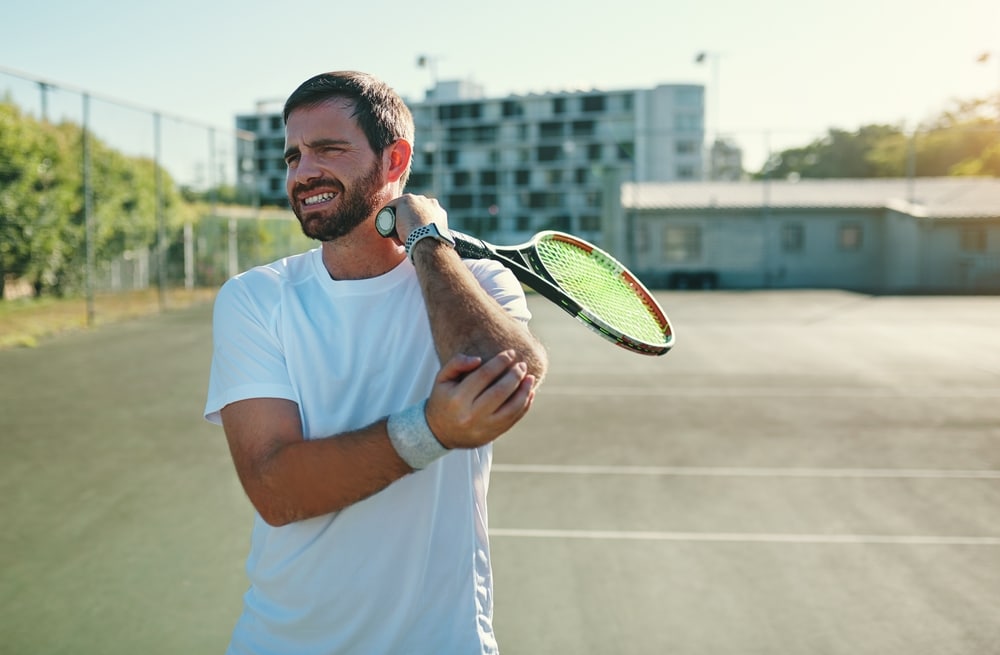
Perhaps the most obvious health condition people associate with the sport of tennis is tennis elbow. Despite the name, individuals can develop tennis elbow through a variety of physical activities, though playing tennis is certainly one of them. Also known as lateral epicondylitis, tennis elbow is an overuse injury that impacts various muscles and tendons in the elbow. The condition results from repeated motions of the wrist and arm, such as the motions tennis players make when serving the ball and hitting ground strokes.
Players can reduce tennis elbow risk in two ways. First, individuals must develop proper technique. Even recreational players should consider lessons or instructional videos to avoid habits that increase injury risk. Improper technique can cause chronic arm and wrist pain.
Second, individuals need to carefully manage the amount of time they spend on the court, especially as beginners. As mentioned, tennis elbow is an overuse injury, meaning it results from players spending too much time on court without giving their bodies the time they need to rest. Rest is also one of the primary treatments for tennis elbow; individuals who continue to play will only complicate the issue and experience more pain. Home remedies include ice applications and compression, with additional treatment options ranging from pain medicines to physical therapy. In extreme cases, a person may require an injection or surgery.
Golfer’s elbow is a similar condition. Tennis elbow causes pain on the outer elbow; golfer’s elbow affects the inner elbow. Both can occur together and restrict forearm, hand, and wrist movement.
Tennis elbow and golfer’s elbow are only two of several overuse injuries tennis players can experience. Other conditions include rotator cuff tendinopathy, labral tears, and rotator cuff tendonitis, also known as a shoulder impingement. To minimize the risk of shoulder injuries, players should invest in a quality tennis racket that is not too large or heavy. They also need to carefully schedule their playing time, listen to their bodies, and take days off as needed.
The wrist is very vulnerable to injuries while playing tennis, especially as players expand their skills and start focusing on racket head speed. Skilled players can create considerable pace and spin on the ball with a simple flick of the wrist on contact, but this maneuver can contribute to carpal tunnel syndrome and various tendon injuries. Falls on the tennis court, meanwhile, can lead to wrist sprains and other injuries. Players can reduce the risk of falls by wearing properly fitted athletic shoes while playing tennis.
Finally, players should stretch and warm up prior to a match or hitting session to reduce their risk of injury from fast sprints and sudden pivots. These injuries include ligament sprains and tears, meniscus injuries, and patellar tendonitis.
About Mark Izydore
Mark Izydore is a co-manager at CJ Consultants, a Florida-based analytics and advisory firm, where he develops strategies to help organizations expand market reach. He previously worked as an accountant at Arthur Andersen and received recognition for a financial presentation. He holds a bachelor of science in accounting from Duquesne University and studied music theory at Carnegie Mellon University. Outside of work, Mark Izydore enjoys tennis, basketball, and participating in food and wine events as a member of Les Amis Du Vin.